The Google I/O 2026 Megadrop: Autonomous Agents, Multimodal World Models, and the Changing Fabric of the Web
On This Page
- Introduction: The Pivot from Benchmarks to Utility
- 1. The Gemini 3.5 Era: Flash, Economics, and Agentic Dominance
- 2. Gemini Omni: The Any-to-Any Multimodal World Model
- 3. The Rise of Autonomous Agents: Gemini Spark & Antigravity 2.0
- 4. Redefining Digital Commerce: Universal Cart and Agent Payments
- 5. The Search Engine Paradigm Shift: AI Overviews and the Creator Dilemma
- 6. Bridging the Physical Gap: AR Glasses, Spatial Computing, and SynthID
- 7. The Broader Ecosystem: Anthropic’s Coup, Financial AI, and Robotics
- Conclusion: The Era of Deployment
Key Takeaways
- Google I/O 2026 introduced Gemini 3.5 Flash — a cost-efficient model matching Claude Opus 4.7 and GPT 5.5 at a fraction of the price ($1.50/M input tokens), optimized for agentic workloads
- Gemini Omni delivers any-to-any multimodal generation with world knowledge grounding, transforming video editing, avatar creation, and educational content
- Autonomous agents go mainstream: Gemini Spark (persistent cloud agent) and Antigravity 2.0 (AI-native IDE) redefine digital automation with human-in-the-loop safeguards
- Universal Cart and Agent Payments Protocol revolutionize e-commerce with cross-domain persistent shopping and autonomous AI purchasing
- Google Search undergoes its biggest transformation in 20 years — AI Overviews and Search Agents create a paradigm shift that threatens the open web's traffic-driven ecosystem
🔗 Back to Home: SimpleAIGuide.tech
📚 Explore More:
- Google I/O 2026: Every Major AI Announcement Explained
- The Best AI Tools for 2026 — Claude, Gemini & More
- Andrej Karpathy Joins Anthropic — AI Jobs Analysis
- The Agentic Shift: Why AI Agents Are Taking Over
Published exclusively on simpleaiguide.tech | In-Depth Technical Analysis
Introduction: The Pivot from Benchmarks to Utility
The tech world just experienced a seismic shift. If you missed this week’s developments, particularly the tidal wave of announcements from Google I/O 2026, you missed the blueprint for the next half-decade of digital infrastructure. With over 100 distinct product launches, feature updates, and architectural overhauls, Google has made a definitive statement: the era of raw benchmark chasing is giving way to the era of frictionless utility and agentic automation.
For years, the AI narrative has been dominated by a singular metric: how smart is the model? We watched the leapfrog game between OpenAI’s GPT series, Anthropic’s Claude, and Google’s Gemini. But I/O 2026 signaled a maturity in the ecosystem. The focus is no longer just on creating a smarter brain; it is about giving that brain hands, eyes, ears, and a wallet.
In this massive deep dive, we are unpacking the most consequential announcements of the week. From the introduction of Gemini 3.5 Flash and the breathtaking capabilities of Gemini Omni, to the deployment of cloud-native autonomous agents via Gemini Spark and Antigravity 2.0. We will explore how these tools disrupt established workflows, how the new Universal Cart redefines digital commerce, and what the controversial changes to Google Search mean for the open web. Furthermore, we will look beyond Mountain View at the latest moves from OpenAI, Anthropic, and Spotify.
1. The Gemini 3.5 Era: Flash, Economics, and Agentic Dominance
The anticipation surrounding the next generation of Gemini was palpable, and Google delivered a nuanced strategy. Instead of immediately unleashing the resource-heavy Gemini 3.5 Pro to the public, they introduced the Gemini 3.5 family by leading with 3.5 Flash. This is a deliberate, highly calculated move targeting developers and enterprise integrators who prioritize speed-to-intelligence ratios over absolute reasoning depth.
Gemini 3.5 Flash is engineered to be a lightweight, lightning-fast model. When evaluating its performance on rigorous benchmarks like Terminal Bench and SWE-bench Pro, Flash operates comfortably in the same weight class as Claude Opus 4.7 and GPT 5.5. However, its true competitive advantage emerges in agentic evaluations. Flash outperformed its heavier rivals in multi-step agent scenarios, proving that smaller, optimized models are often better suited for autonomous task execution than massive monolithic neural networks.
The economics of 3.5 Flash are equally disruptive. At $1.50 per million input tokens and $9.00 per million output tokens, it aggressively undercuts the market. For comparison, Claude 4.7 demands $5.00 for input and $25.00 for output, while GPT 5.5 sits at $5.00 and $30.00 respectively. This aggressive pricing structure fundamentally alters the calculus for deploying complex, multi-agent architectures.
For developers who actively build and deploy agentic AI frameworks, managing costs while maintaining low latency is the primary engineering bottleneck. While localized execution environments powered by tools like Ollama or Agent Zero offer unparalleled privacy and zero API costs, the hardware overhead for running highly capable models locally remains high. Gemini 3.5 Flash bridges this gap, offering a cloud-based API that is cheap and fast enough to power continuous, background-running agents without bankrupting the developer.
2. Gemini Omni: The Any-to-Any Multimodal World Model
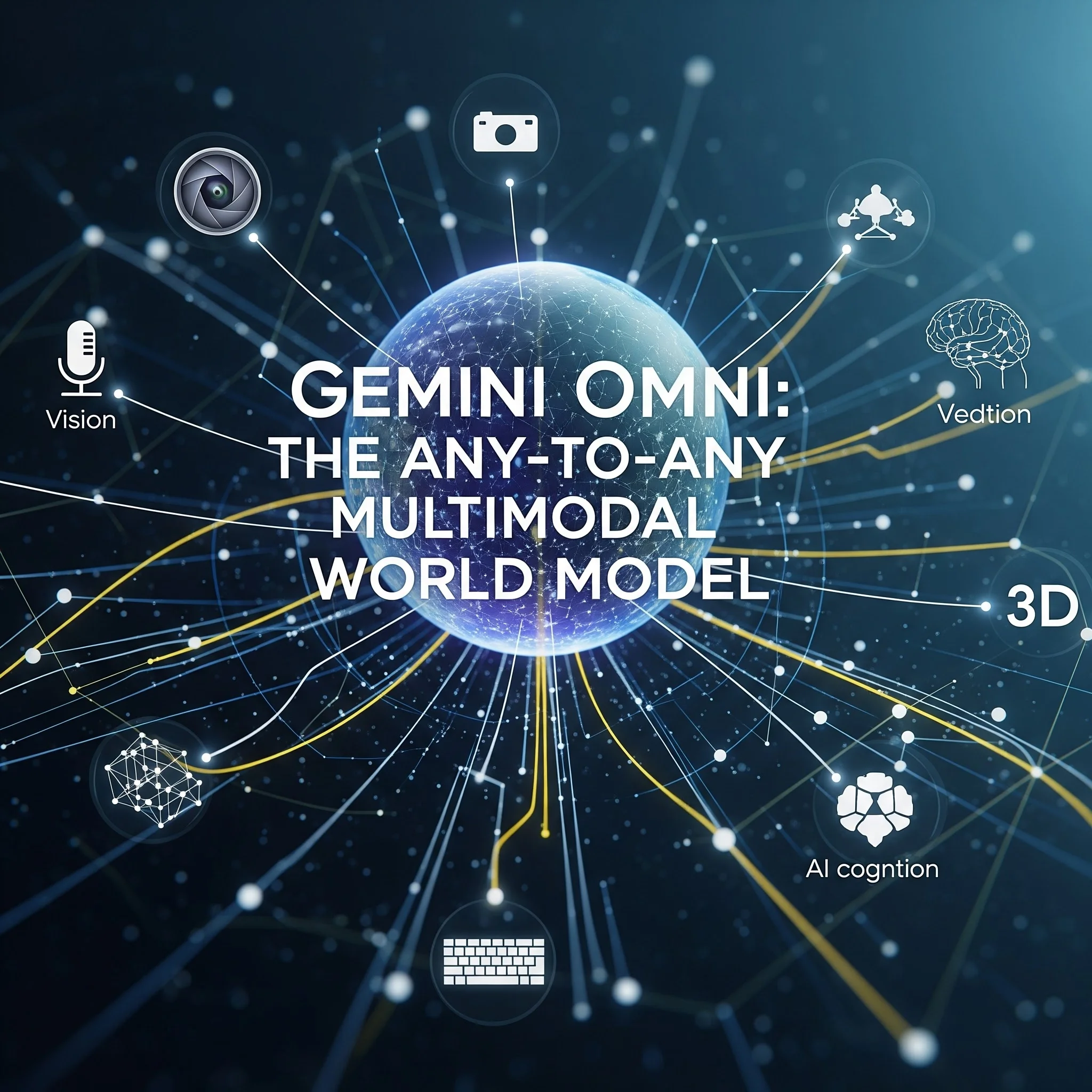
While 3.5 Flash handles the cognitive workload, Gemini Omni represents Google’s most ambitious leap into multimodal world modeling. The Omni architecture abandons the siloed approach of having separate models for text, image, and video generation. Instead, it is designed to natively process any input modality and generate any output modality. Currently, the most public-facing manifestation of this is its video capability.
Imagine feeding an AI a text prompt, a static image, or an audio clip, and having it generate or edit high-fidelity video with perfect spatial consistency. Omni is not just a text-to-video generator; it is a native video editor. You can input a video of yourself walking down a street and prompt the model to “turn this into a pixel art animation” or “add a monkey dodging the camera.” The model understands the physics of the scene, the lighting, and the depth, altering the video while maintaining temporal consistency.
Crucially, Omni is grounded in world knowledge. In a breathtaking demo, Omni was tasked to create a “claymation explainer of protein folding.” It didn’t just generate generic clay shapes; it actively researched the biological mechanics of amino acids, alpha helices, and beta sheets, rendering an accurate, educational animation. This synthesis of information retrieval and generative rendering marks a turning point for digital education and content creation.
Additionally, the new Avatar feature allows users to scan their face via a quick selfie video, generating a consistent digital persona that can be injected into any generated scene. You can prompt the model to have your avatar explain quantum computing on a chalkboard or dunk a basketball. While the physics and proportions still exhibit occasional generative quirks, the fidelity of the likeness is staggering.
3. The Rise of Autonomous Agents: Gemini Spark & Antigravity 2.0

The concept of the AI agent — a system that doesn’t just chat, but acts — has been the holy grail of recent AI research. With the launch of Gemini Spark and Antigravity 2.0, Google is operationalizing autonomous agents at a massive scale.
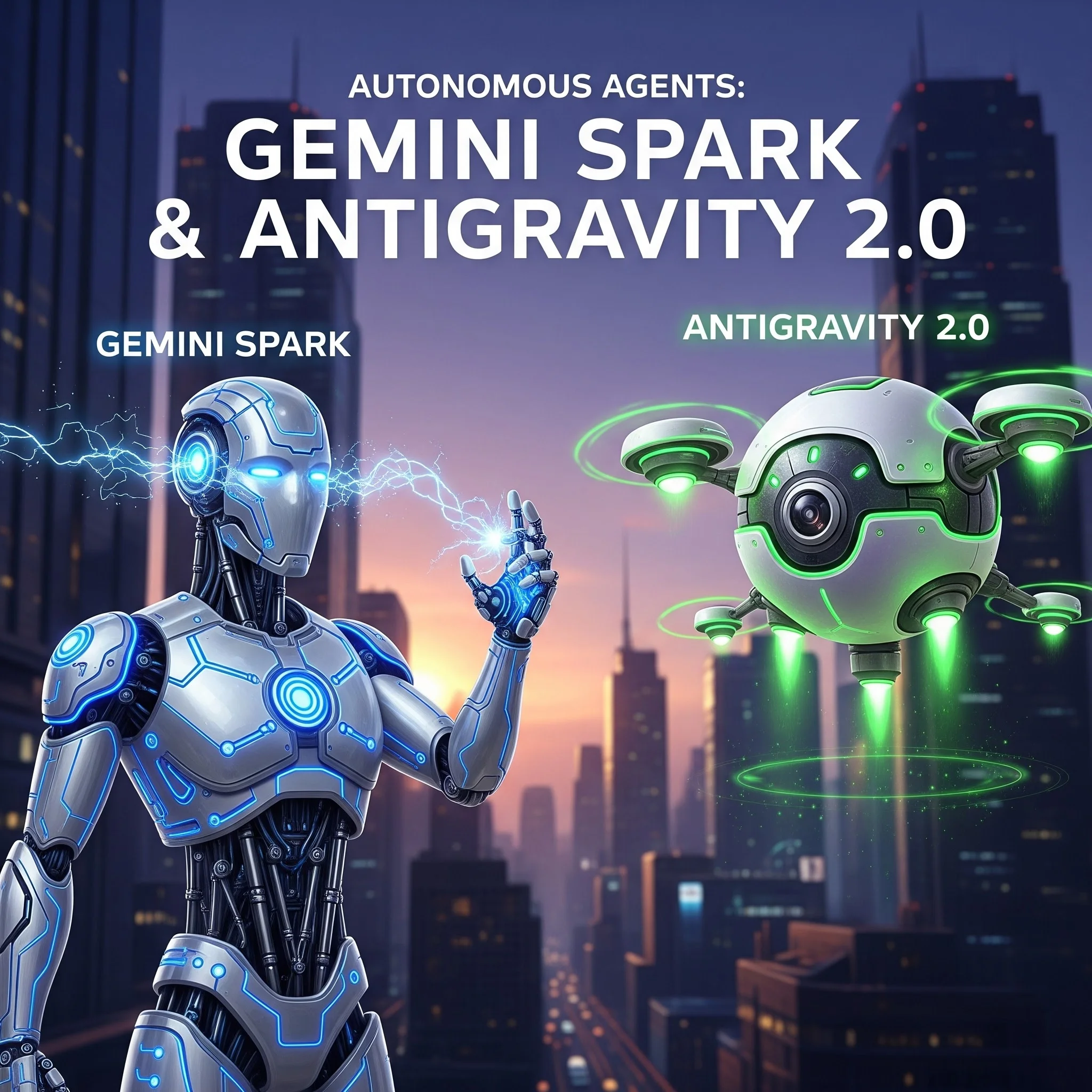
Gemini Spark is a cloud-native agent designed to run continuously on Google’s servers. Unlike local setups that sleep when your machine sleeps, Spark is always online, deeply integrated into your Google ecosystem. It can actively monitor your Gmail, manage your Calendar, synthesize meeting notes, and orchestrate complex workflows. You can instruct Spark to “monitor the news for developments in quantum computing, cross-reference it with my investment portfolio, and draft a summary document every morning at 8 AM.” Because it operates within the Google Cloud, it utilizes MCP connectors to interact with third-party services like Canva or Instacart, acting as a true digital surrogate.
For software engineers, the release of Antigravity 2.0 fundamentally shifts the landscape. This updated IDE acts as a localized command center for AI-assisted development. While it bears visual similarities to platforms like Cursor or OpenAI’s Codex, Antigravity 2.0 is deeply optimized for spinning up and testing agentic frameworks. For developers accustomed to orchestrating multi-agent systems via terminal interfaces, having a cohesive, visual environment that natively supports the new Gemini agent protocols drastically accelerates deployment pipelines.
Of course, granting an AI autonomous control over emails and applications raises immediate security questions. Google DeepMind’s leadership has emphasized a strict permission-based architecture. Spark operates under defined trust thresholds; it might summarize internal documents autonomously, but it requires explicit human authorization before sending external communications or executing financial transactions. This “human-in-the-loop” philosophy is critical for enterprise adoption.
4. Redefining Digital Commerce: Universal Cart and Agent Payments
One of the most quietly revolutionary announcements at I/O was the Universal Cart and the accompanying Agent Payments Protocol. Digital commerce is currently highly fragmented; a consumer must manage separate checkout experiences, accounts, and payment gateways across every individual storefront they visit.
The Universal Cart acts as an overarching, browser-level shopping basket that persists across domains. A user can add a product from a major retailer, jump to an independent digital storefront running on Shopify, add another item, and complete a single, unified checkout process later. For independent operators managing specialized stores — whether selling hardware components or boutique apparel — this dramatically reduces checkout friction, a metric directly tied to conversion rates.
This system is augmented by profound AI intelligence. The cart actively cross-references items for compatibility (e.g., warning a user if the specific RAM they added is incompatible with the motherboard in their cart). Furthermore, the Agent Payments Protocol allows autonomous agents to execute purchases on the user’s behalf. Users can define strict parameters, allowing their AI to monitor prices and automatically purchase inventory when it drops below a threshold.
From a financial technology perspective, this creates fascinating opportunities for payment routing. The AI could be programmed to dynamically select the optimal payment method for a specific transaction, intelligently routing payments through specific networks — such as the RuPay network — to maximize cashback rewards on specific credit tiers. This level of automated financial optimization represents the convergence of AI and decentralized finance.
5. The Search Engine Paradigm Shift: AI Overviews and the Creator Dilemma
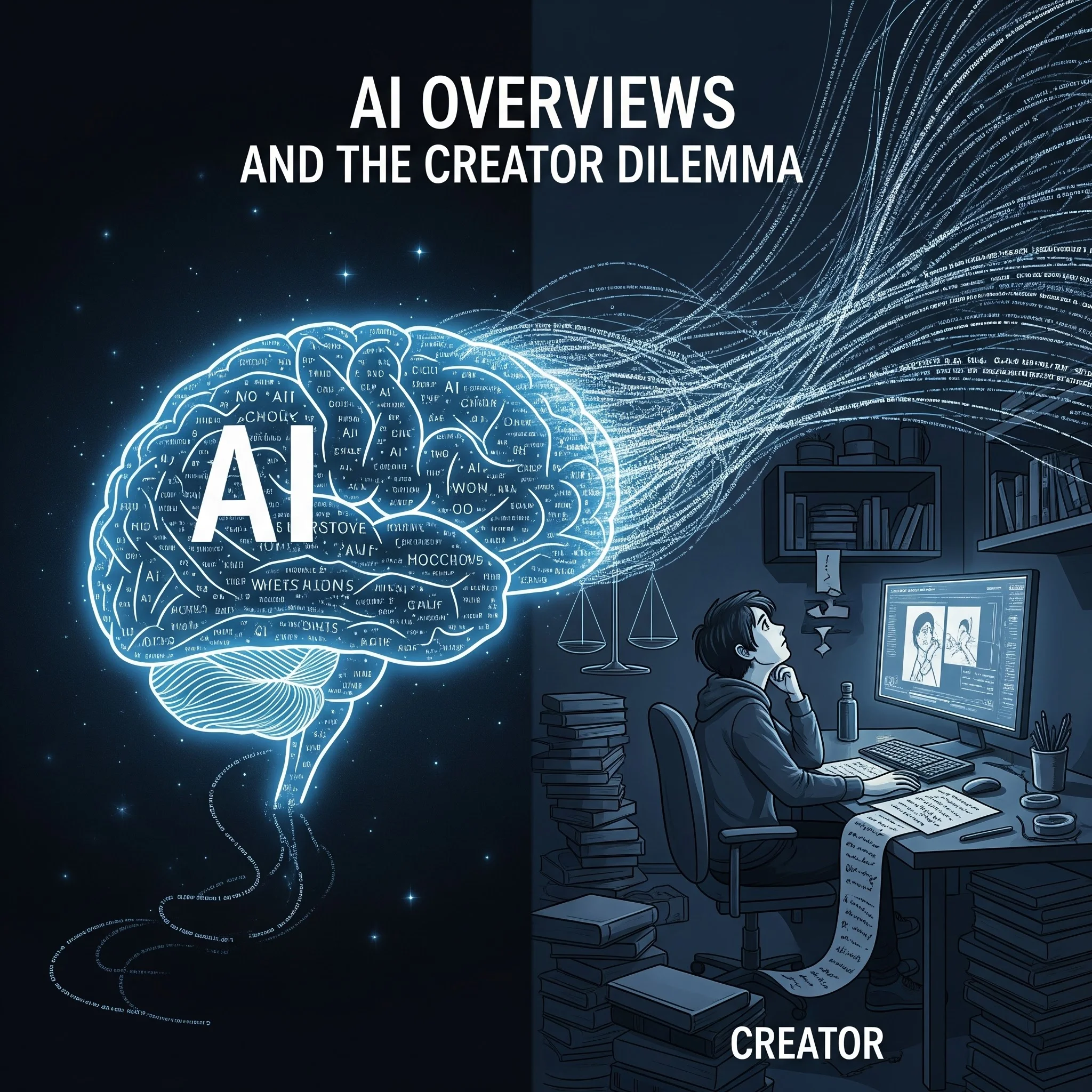
Google’s core product — the search engine — is undergoing its most radical transformation in two decades. Search is transitioning from an index of links to an interactive generative interface. The traditional search bar is being replaced by an expansive prompt box, and AI Overviews are becoming the default experience.
When a user queries complex topics, Google will now generate comprehensive, synthesized answers directly at the top of the page, often pushing organic blue links far below the fold. The AI can even generate interactive widgets, such as a slider to demonstrate the effect of black holes on spacetime, directly within the search results.
This shift is highly controversial. The ecosystem of the open web relies on traffic. Content creators, journalists, and specialized tech blogs rely on search visibility to drive audiences to their platforms. If Google’s AI aggressively scrapes this content to provide zero-click answers, the incentive to produce high-quality, original research diminishes rapidly. This creates a parasitic loop: the AI starves the very creators who generate the data it needs to train and ground its responses.
Furthermore, Google introduced “Search Agents” — persistent algorithms that continuously monitor the web for specific queries and alert the user when new, highly relevant information emerges. While powerful for the end-user, this fundamental re-architecting of the web’s traffic flow will force digital publishers to radically adapt their monetization and distribution strategies, potentially prioritizing direct audience relationships over algorithmic search reliance.
6. Bridging the Physical Gap: AR Glasses, Spatial Computing, and SynthID
The digital and physical realms are colliding. Project Genie, Google’s interactive generative environment, was previously restricted to generating fictional 2D game worlds. Now, it integrates directly with Google Maps Street View. Users can drop an AI-generated, controllable character into a real-world digital twin of any city and interact with the environment. While currently a novelty, the implications for augmented reality, urban planning simulation, and spatial computing are profound.
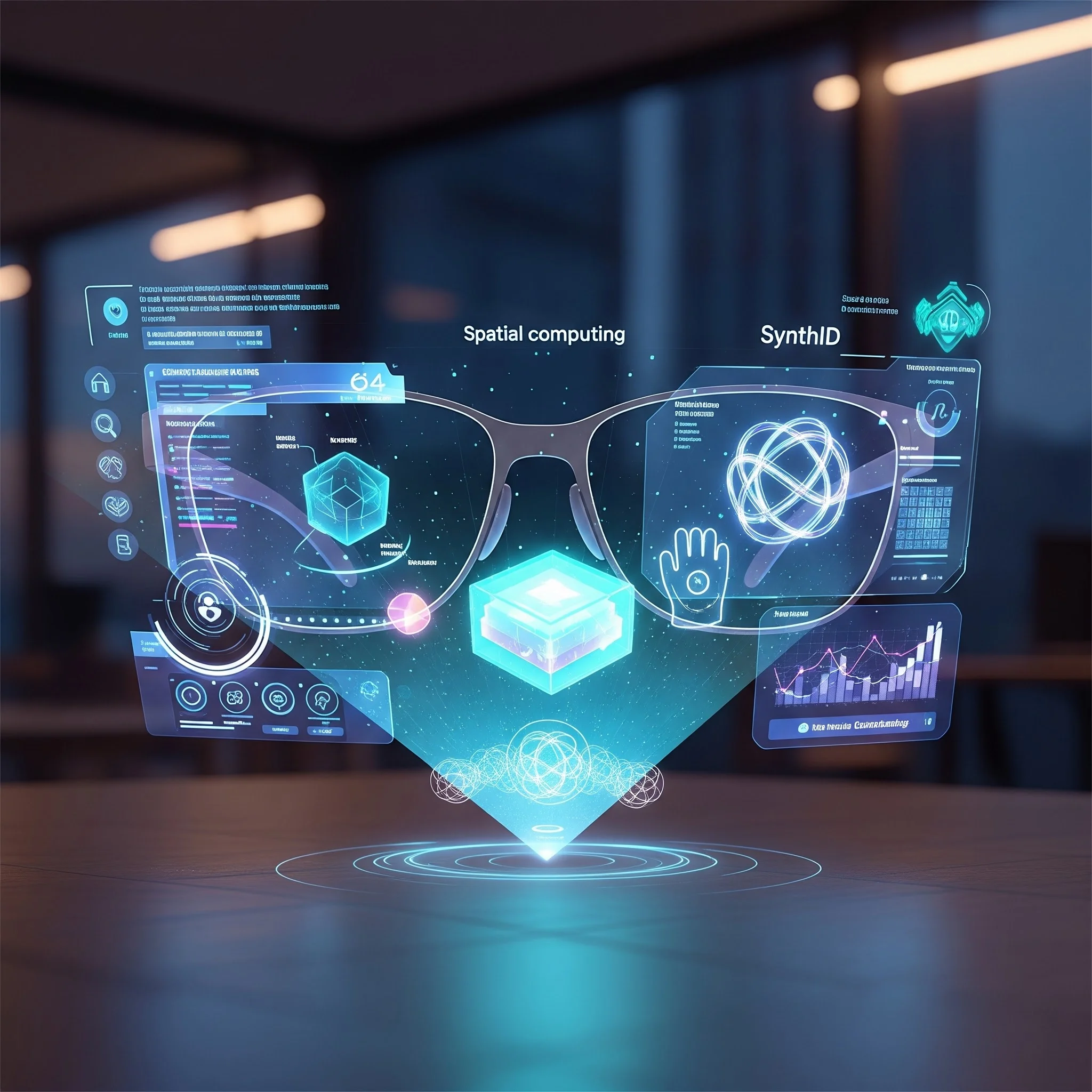
Speaking of augmented reality, the long-rumored AI glasses are finally arriving this fall. Developed in partnership with Warby Parker and Gentle Monster, the initial audio-centric models will function as persistent, wearable AI assistants — translating live conversations, summarizing notifications, and executing voice commands, directly competing with the Meta Ray-Bans.
As generative media becomes indistinguishable from reality, provenance and verification are critical. Google is expanding its SynthID technology — an imperceptible digital watermark embedded directly into the pixel or audio data of AI-generated content. Notably, major competitors like OpenAI and 11 Labs have agreed to adopt this standard. The implementation of robust, standardized watermarking is a critical step in the current cybersecurity landscape, providing an essential foundational layer for AI-driven deepfake detection systems aiming to preserve digital evidence integrity.
7. The Broader Ecosystem: Anthropic’s Coup, Financial AI, and Robotics
While Google dominated the news cycle, the rest of the industry made massive strategic maneuvers. In a shocking personnel shift, Andrej Karpathy — former Director of AI at Tesla and original founding member of OpenAI — has officially joined Anthropic. Karpathy is widely considered one of the foremost educators and architects in the LLM space, and his move to Anthropic signals an aggressive escalation in the talent war between the leading frontier model developers.
OpenAI pushed the boundaries of integration by rolling out a personal finance experience within ChatGPT. By integrating directly with Plaid, users can now securely link their bank accounts to the model, allowing ChatGPT to analyze transaction histories, audit subscription costs, and provide hyper-personalized financial advice. While technically impressive, feeding granular financial data into an ad-driven LLM architecture raises significant, ongoing privacy concerns.
In the developer tooling space, Cursor released Composer 2.5. This new coding model achieves benchmark parity with heavyweights like Claude Opus 4.7 but operates at a fraction of the compute cost (less than a dollar per major task), further democratizing access to elite automated software engineering.
Finally, Spotify fully embraced generative audio, announcing licensing agreements with Universal Music Group to officially support and monetize AI-generated fan covers and remixes. They also launched a feature allowing users to generate customized, private podcast episodes — effectively functioning as highly personalized daily audio briefings generated on the fly. And in the realm of robotics, Boston Dynamics showcased their latest bipedal unit casually lifting and carrying an entire refrigerator across a room, proving that while software agents are automating the web, physical agents are rapidly preparing to automate the physical world.
Conclusion: The Era of Deployment
The announcements from this week, spearheaded by Google I/O, paint a vivid picture of the immediate future. The novelty phase of generative AI is definitively over. We are entering the deployment and integration phase. Models are becoming smaller, faster, and cheaper to facilitate continuous, agentic operations. Multimodal architectures are learning to see, hear, and manipulate the digital world with unprecedented spatial and temporal awareness.
As these tools weave themselves into the fabric of our IDEs, our shopping carts, and our search engines, the definition of digital interaction is changing. The challenge for developers, creators, and technologists is no longer figuring out how to prompt a model; it is figuring out how to orchestrate a fleet of autonomous systems to build, manage, and secure the next generation of the internet.
💡 Want more AI guides, tutorials, and deep dives? Visit: SimpleAIGuide.tech
📚 Further Reading:
- Google I/O 2026: Every Major AI Announcement Explained
- Andrej Karpathy Joins Anthropic — AI Jobs & Displacement Analysis
- The Best AI Tools for 2026 — Ranked by Real ROI
- The Titans Memory Architecture — Beyond Transformers
- The Agentic Shift: Why AI Agents Are Taking Over
Written by Simple AI Guide Team
We are a team of AI enthusiasts and engineers dedicated to simplifying artificial intelligence for everyone. Our goal is to help you leverage AI tools to boost productivity and creativity.
Personally Tested by Our Team
This article and all recommended tools were reviewed with real prompts, hands-on checks, and editorial QA before publishing.
Testing Methodology
We test each AI tool using standardized prompts across 5 categories: accuracy, speed, ease of use, value, and unique features.
Content Last Updated
Last reviewed and updated on May 23, 2026. We'll update again when new versions are released.
Discussion
Comments powered by Supabase
Continue Reading
Related Articles
Google I/O 2026: The Day AI Transitioned from Predicting Text to Simulating Reality
Complete breakdown of Google I/O 2026: Gemini Omni Flash video generation, Antigravity 2.0 agentic framework, Gemini Spark 24/7 autonomous agents, Search reimagined with generative UI, Stitch/Flow creative tools, smart eyewear, and more.
Read moreThe Day Code Editors Vanished: Inside Google's Forced Pivot to Antigravity 2.0
Google phased out traditional editors in favor of Antigravity 2.0 — an AI-native development ecosystem powered by Gemini 3.5 Flash and managed agents. Complete analysis of the pivot, backlash, and what it means for developers.
Read moreGoogle I/O 2026: Every Major AI Announcement Explained — The Biggest 24 Hours in AI History
Complete breakdown of Google I/O 2026: Gemini 3.5 Flash, AI-powered Search redesign, Gemini Spark agents, Anti-Gravity 2.0, Google Flow, SynthID, Smart Glasses, and 16+ major AI announcements explained.
Read more