Google I/O 2026: Every Major AI Announcement Explained — The Biggest 24 Hours in AI History
On This Page
- 1. Gemini 3.5 Flash: The Model Powering Everything at Google
- What Is Gemini 3.5 Flash?
- Why It Matters
- 2. Gemini Omni Flash: AI Video Generation Has Changed Forever
- What Is Gemini Omni Flash?
- Real-World Example
- Use Cases for Creators and Educators
- 3. Google Search Gets Its First Redesign in 25 Years
- What Changed
- Agents Inside the Search Bar
- Interactive Simulations Going Live Globally
- 4. Gemini Spark: Your 24/7 Personal AI Agent
- How Gemini Spark Works
- Real-World Examples Shown at I/O
- The Game-Changer: It Works While You Sleep
- 5. Daily Brief: Your AI-Powered Morning Briefing
- 6. Anti-Gravity 2.0: Google’s Multi-Agent Developer Platform Rebuilt
- From Code Terminal to Chat Interface
- What It Can Actually Build
- Why This Matters
- 7. Google Flow: AI Filmmaking Tools for the Creative Era
- Flow Tools: Vibe Coding for Video Creators
- Flow Agent: AI at Every Stage of Creation
- Flow Music: The Audio Editing Revolution
- 8. Google Stitch: Five Major UI Design Upgrades
- The Five New Stitch Features
- 9. Google Picks: Image Editing That Thinks Like a Designer
- What You Can Do in Google Picks
- 10. Project Genie: Real Places, Imagined Worlds
- How It Works
- Examples From the Demo
- 11. Ask YouTube: Conversational Video Search
- How Ask YouTube Works
- 12. Google Smart Glasses: Android XR Takes on Meta
- Two Varieties
- 13. Gemini for Science: Accelerating Research at Unprecedented Scale
- Science Skills
- Weather Next
- 14. SynthID: 100 Billion Watermarks and Expanding Fast
- What Is SynthID?
- New at I/O 2026
- 15. The Gemini App: Rebuilt from the Ground Up
- Key Improvements
- 16. Pomelo: Full Agentic Business Creation for Small Businesses
- What Pomelo Can Now Do
- What Google I/O 2026 Really Means: The Platform Shift Is Here
- What This Means for You
- Google I/O 2026 Quick Reference Summary
- Final Thoughts: The Age of AI Infrastructure Is Here
- Frequently Asked Questions
- What was the biggest announcement at Google I/O 2026?
- When is Gemini 3.5 Flash available?
- What is Gemini Spark?
- How does the new Google Search work?
- What is Anti-Gravity 2.0?
- Is SynthID available to the public?
- Sources
Key Takeaways
- Google I/O 2026 shipped 20+ production-ready AI announcements in a single event — the largest AI release in history
- Gemini 3.5 Flash is 4x faster and 33-50% cheaper than its predecessor, setting a new production AI benchmark
- Google Search got its first redesign in 25 years with generative results, agents inside the search bar, and interactive simulations
- Gemini Spark is a 24/7 autonomous agent that works while you sleep — deeply integrated with Google Workspace
- Anti-Gravity 2.0 reduces the entire developer environment to a chat interface — build working software with plain English
Google I/O 2026 just happened — and if you blinked, you missed one of the most consequential 24-hour periods in the entire history of artificial intelligence. In a single event, Google didn’t just release new features. They rebuilt nearly every product they own from the ground up with AI at the core: Search, YouTube, Gmail, Android, hardware, Chrome, and beyond.
This is not hyperbole. No company — not OpenAI, not Microsoft, not Apple — has ever shipped this volume of meaningful, production-ready AI tools in a single event. We’re talking 20-plus major announcements, spanning consumer apps, developer tools, scientific research, hardware, and safety infrastructure.
In this deep-dive guide, we break down every major Google I/O 2026 announcement in plain English — what it is, why it matters, and how you can start using it today. Whether you’re a founder, a creator, a researcher, or just someone who wants to understand where AI is actually headed, this is the article you need to read.
Key Insight: AI is no longer predicting text. Google is now using it to simulate reality, power agents that work while you sleep, and rebuild the entire surface layer of the internet.
For more AI industry coverage, check out our AI news section and latest AI updates.
1. Gemini 3.5 Flash: The Model Powering Everything at Google
Before diving into individual tools, it’s important to understand the engine running under all of them: Gemini 3.5 Flash. This is Google’s newest frontier model, and it’s the foundation for virtually every AI update announced at I/O 2026.
What Is Gemini 3.5 Flash?
Gemini 3.5 Flash is described by Google as four times faster than competing frontier models on output tokens per second. It also costs roughly one-third to one-half of what the previous flagship model — Gemini 3.1 Pro — used to cost. That’s a rare combination: faster and cheaper without sacrificing capability.
According to Google’s own benchmarks, Gemini 3.5 Flash outperforms Gemini 3.1 Pro across coding, agentic tasks, and multimodal understanding. The bigger sibling — Gemini 3.5 Pro — is launching next month and promises even more reasoning power.
Why It Matters
If you’re building anything with AI right now — whether it’s a startup, a side project, a workflow automation, or a client tool — Gemini 3.5 Flash is going to be your new default. The speed and cost improvements alone make it significantly more practical for production-grade applications than most alternatives on the market.
Quick Fact: Gemini 3.5 Flash is 4x faster on output tokens/sec and costs 33-50% less than its predecessor, making it the new benchmark for production AI development. For context on the previous generation, see our Gemini vs Claude comparison.
2. Gemini Omni Flash: AI Video Generation Has Changed Forever
For years, AI video generation has been impressive on the surface but hollow underneath. Tools could produce visually stunning footage, but the content lacked real-world accuracy. The science was wrong, the context was missing, and the results felt more like an aesthetic hallucination than genuine communication.
Gemini Omni Flash is designed to fix that permanently.
What Is Gemini Omni Flash?
Gemini Omni Flash is a new multimodal model from Google that combines Gemini’s world-knowledge reasoning with the ability to generate video from scratch. You can feed it any combination of images, audio clips, existing footage, and plain text — and it will produce a finished, high-quality video that actually understands what it’s talking about.
The key differentiator is that Omni is built on top of everything Gemini already knows about the world. So when you ask it to make a video about protein folding in a claymation style, it doesn’t just generate pretty visuals — it generates scientifically accurate visuals that match the narration in real time.
Real-World Example
The Google I/O demo showed a single-sentence prompt — “Make a claymation explainer of protein folding. Don’t use hands or stop motion and make it accurate.” — producing a fully finished, narrated claymation video with accurate scientific content. The visuals matched the voiceover frame by frame. No human wrote the script. No expert reviewed the science in advance.
Use Cases for Creators and Educators
- Educational content creation at scale without a production team
- Explainer videos for complex topics in custom visual styles
- Product demo videos generated from product specs alone
- Social media content produced from a single text brief
For more on AI video tools, see our best AI video generators guide.
3. Google Search Gets Its First Redesign in 25 Years
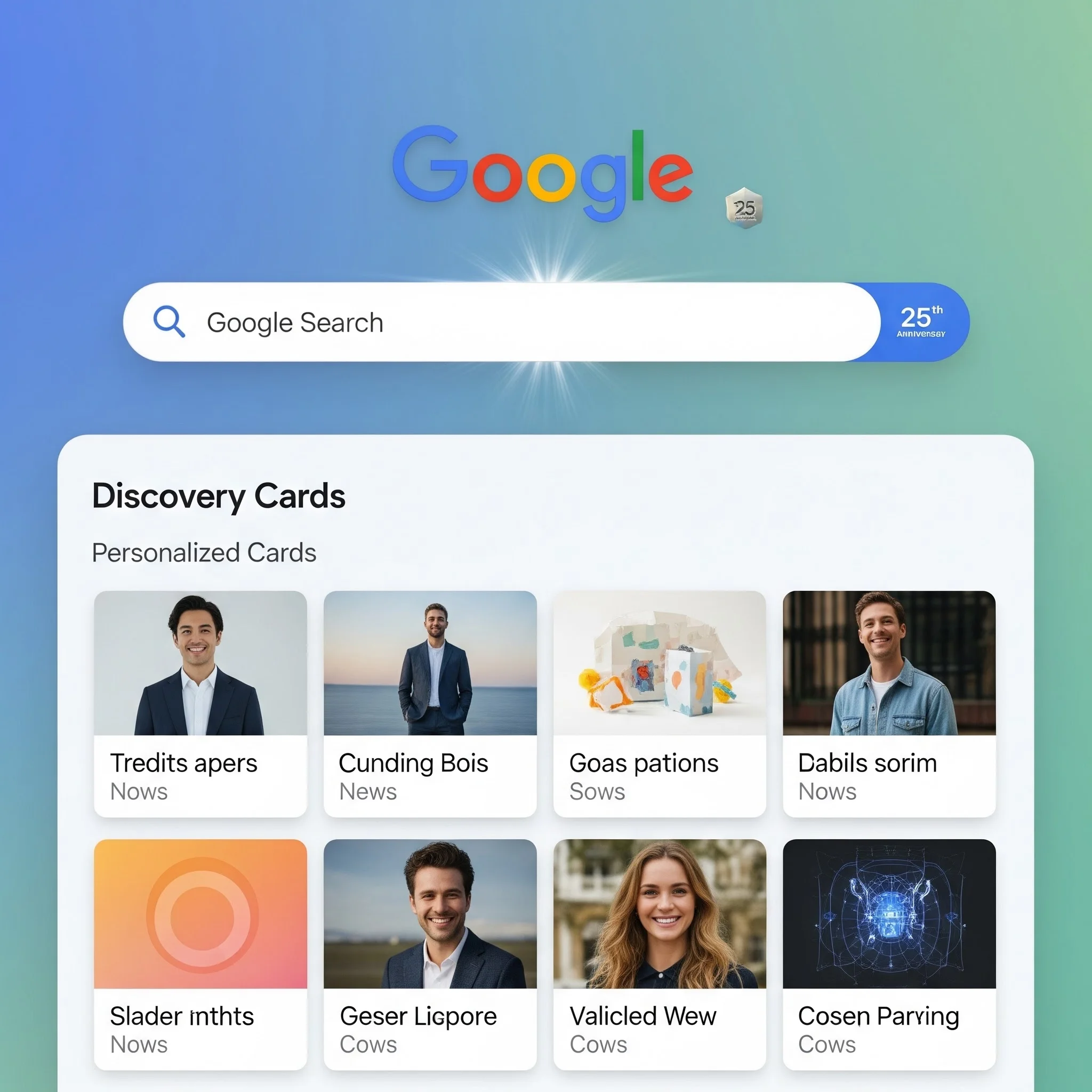
Google Search has looked essentially the same since 1998 — a text box, a button, and a list of blue links. That era is now officially over.
What Changed
The new Google Search accepts images, files, videos, and even open Chrome browser tabs as part of your query. You can drop in a product photo and ask where to buy it, paste a PDF and ask it to summarize, or reference an open tab without even describing what it contains. Search analyzes everything together and responds accordingly.
More significantly, the new Search interface is generative. Rather than returning a static list of links, it now builds a custom user interface inside the results page based on the specific nature of your query. Ask about astrophysics and it generates an interactive simulation. Ask it to plan a home move and it builds a custom dashboard with checklists, timelines, and local service recommendations.
Agents Inside the Search Bar
The most transformative addition is the embedding of AI agents directly inside the search bar. These agents work 24/7, tracking topics you care about and pushing notifications when relevant things change. You could set an agent to monitor a limited-edition sneaker drop from your favorite athlete and receive a notification the moment it’s announced and available to buy.
Interactive Simulations Going Live Globally
Google Search can now write and execute real code inside the results page to answer your question. Instead of 10 blue links about astrophysics, you get a live interactive simulation you can click through and explore. This is launching globally today for the new input features, with the interactive simulations rolling out globally this summer — completely free.
Bottom Line: Google Search is no longer a directory. It’s becoming an operating system for your questions, capable of building custom tools and tracking topics on your behalf.
4. Gemini Spark: Your 24/7 Personal AI Agent
Gemini Spark is one of the most practically transformative announcements from Google I/O 2026. It’s not just a smarter assistant — it’s an autonomous agent that does real work on your behalf, continuously, even when your laptop is closed.
How Gemini Spark Works
Spark is deeply integrated with Google’s full workspace ecosystem: Gmail, Docs, Slides, Calendar, and more. It monitors your digital life, identifies what needs doing, and acts on it — under your direction, but without requiring you to manually trigger every task.
Real-World Examples Shown at I/O
- A parent is responsible for nut-free snacks at their child’s school game tomorrow. Spark detects the game in the calendar, understands the snack requirement from the school inbox, adds appropriate items to Instacart, and waits only for payment approval.
- Spark monitors a child’s school email inbox for homework deadlines and compiles a daily report sent to both parents automatically.
- Spark reviews monthly credit card statements and flags any new or hidden subscription fees — without being asked.
The Game-Changer: It Works While You Sleep
Because Gemini Spark runs on Google Cloud, it doesn’t need your device to be active. It operates in the background 24/7, completing tasks, monitoring inboxes, and keeping your digital life organized while you focus on work that actually requires human judgment.
Use Cases: Spark is ideal for busy parents, solo founders, freelancers, and anyone who manages multiple inboxes, calendars, and recurring administrative tasks.
5. Daily Brief: Your AI-Powered Morning Briefing
Google also introduced Daily Brief, a personalized morning summary tool built inside the Gemini app. Every morning, it goes through your Gmail inbox, Calendar, and relevant apps to compile a structured briefing — prioritized by urgency, organized by importance, and delivered before you’ve even had your first coffee.
Unlike standard notification summaries, Daily Brief doesn’t just list what’s there. It contextualizes, prioritizes, and highlights what actually needs your attention today versus what can wait.
6. Anti-Gravity 2.0: Google’s Multi-Agent Developer Platform Rebuilt
Anti-Gravity 2.0 might be the most impressive developer tool shown at I/O 2026 — and ironically, it’s also the least intimidating version of Anti-Gravity ever built.
From Code Terminal to Chat Interface
The original Anti-Gravity looked like a professional developer’s screen: code editors, file trees, terminal windows. It was powerful but inaccessible. The new version strips all of that away completely. The entire interface is now just a chat box — visually identical to ChatGPT or WhatsApp — with three options on the sidebar: new conversation, conversation history, and scheduled tasks.
What It Can Actually Build
To test the limits of the new interface, a single sentence was typed into the chat: “Make a Chrome Dino infinite runner game that plays itself in a cyber theme.” Using Gemini 3.5 Flash as the underlying model, the agent wrote a complete plan within 4 seconds — breaking down the visual style, self-playing logic, obstacle detection, sound design, and more.
The only manual input during the entire build? Clicking “Allow one time” when the agent needed permission to execute something on the local machine. When the initial build hit an error, the agent diagnosed and fixed it entirely on its own without any additional instructions.
The result: a fully working, cyber-themed, self-playing Chrome Dino game — with zero lines of code written by a human.
For more on AI coding tools, see our best AI coding tools comparison and DeepSeek TUI guide.
Why This Matters
Anti-Gravity 2.0 represents a fundamental shift in how software gets built. The barrier to entry for custom software development — always the ability to write and debug code — is being removed. If you can describe what you want in plain English, Anti-Gravity can build it.
7. Google Flow: AI Filmmaking Tools for the Creative Era
Google Flow, originally built with professional filmmakers in mind, received major new capabilities at I/O 2026.
Flow Tools: Vibe Coding for Video Creators
The standout new feature is Flow Tools, which enables vibe coding — building software by describing it in plain English rather than writing actual code. For video creators, this means you can now describe a custom creative tool — a video resizer, a color shader, a visual effects generator — and Flow will build the entire application inside the editor.
Flow Agent: AI at Every Stage of Creation
Alongside Flow Tools, Google shipped Flow Agent, a Gemini-powered assistant embedded throughout the creative workflow. It assists with brainstorming, content creation, video editing decisions, and visual storytelling — reducing the hours of decision-making that traditionally define the post-production process.
Flow Music: The Audio Editing Revolution
Google also launched Flow Music — a major expansion into the audio domain, powered by the new Lyria 3 Pro model. Flow Music allows musicians, producers, and songwriters to:
- Highlight and edit any specific section of a song — a chorus, a guitar line, a lyric — without touching the rest
- Swap a beat drop without re-recording the vocals
- Transform a rock track into lo-fi while keeping the original melody
- Generate a full music video directly from an audio track using Gemini Omni
8. Google Stitch: Five Major UI Design Upgrades
Stitch, Google’s AI-powered UI design tool, received five significant capability upgrades at I/O 2026.
The Five New Stitch Features
- Streaming Render: Designs now appear live on the canvas as the AI generates them. You can start steering and adjusting before the final design is even complete.
- Import from Existing Designs: Start from a Figma file, a codebase, or an existing website.
- In-Place AI Edits: Highlight any single element on your screen and rewrite just that part without regenerating the entire layout.
- Motion on HTML Native Canvas: Build real working animations directly inside your prototypes.
- Expanded Import/Export Options: Now supports .fig files for Figma, plus direct export to Netlify, Lovable, and Bolt.
The standout bonus feature is the ability to import and sync your entire codebase directly inside Stitch, working on both design and code from a single unified environment.
9. Google Picks: Image Editing That Thinks Like a Designer
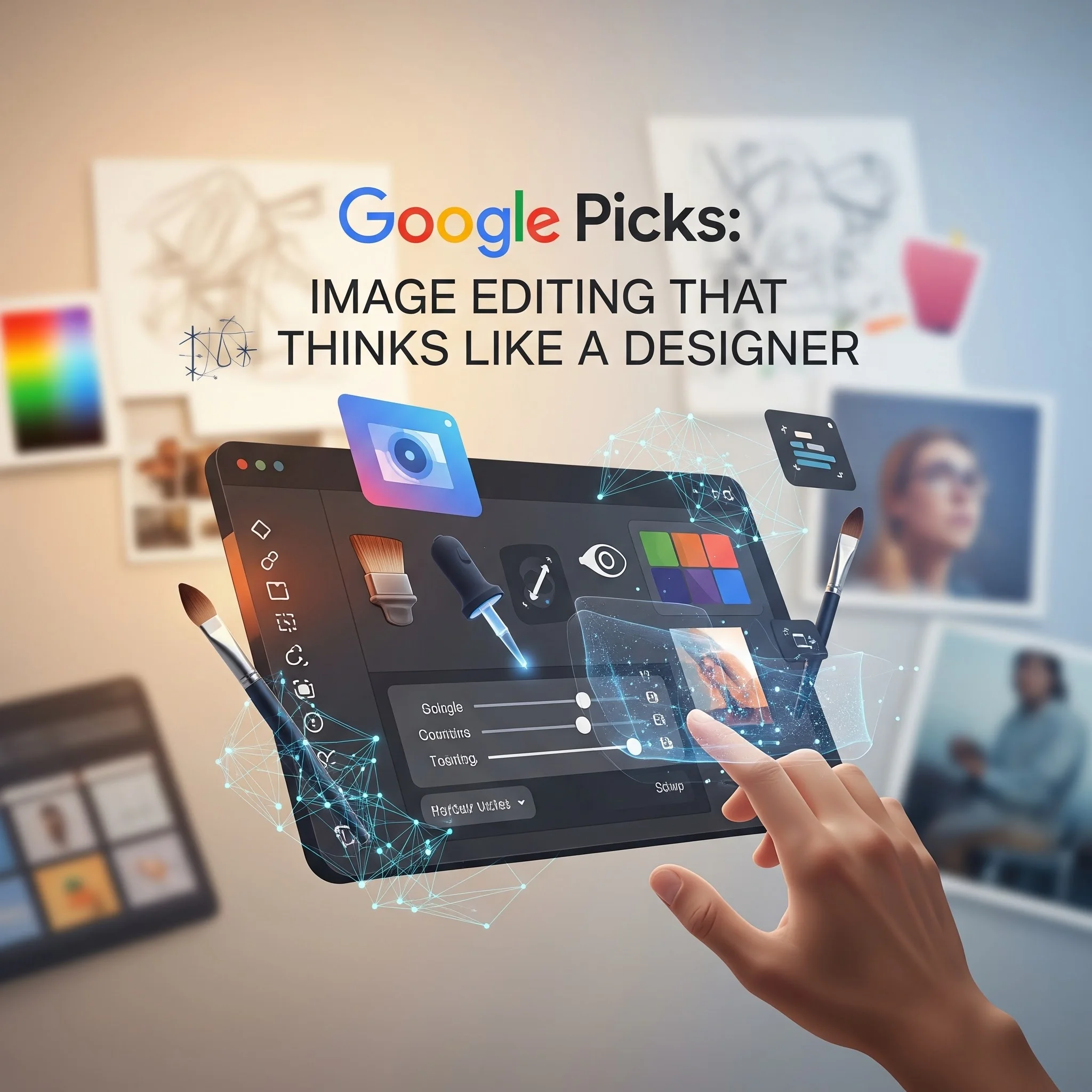
Google Picks is a new AI image creation and editing platform built on the Nano Banana 2 model. The defining characteristic is that it treats every element inside an image as a separate, independently editable object.
What You Can Do in Google Picks
- Select any single object in an image and move, resize, or transform it independently
- Edit text directly inside the image — including translating it into another language while preserving the original font style
- Collaborate with multiple people on the same canvas simultaneously
The result is an image editing experience much closer to a professional designer’s workflow than the typical “type a prompt, receive a picture” approach.
10. Project Genie: Real Places, Imagined Worlds
Project Genie from Google DeepMind is one of the most visually spectacular announcements from I/O 2026. Genie is a model that generates fully interactive virtual environments — and it can now be plugged directly into real Google Street View imagery.
How It Works
You pick a real location from Google Maps. You choose a creative style — Ocean World, Stone Age, Cyberpunk City. You describe a character. Genie then generates a fully interactive virtual world grounded in the actual Street View imagery of that place, but reimagined through the lens of your chosen aesthetic.
Examples From the Demo
- The Golden Gate Bridge explored underwater with schools of tropical fish swimming around the suspension cables
- The Taj Mahal reimagined as it appeared during its original construction in the 1600s
The applications for gaming, virtual tourism, education, and immersive storytelling are significant.
11. Ask YouTube: Conversational Video Search
YouTube is rolling out Ask YouTube, a conversational search feature that replaces keyword guessing with natural language queries — and returns structured, timestamp-accurate answers.
How Ask YouTube Works
Instead of typing keywords like “teach 3-year-old pedal bike,” you type the full question: “How do I teach my 3-year-old to ride a pedal bike if they already know how to ride a balance bike?” Ask YouTube understands the intent, finds the most relevant videos across YouTube’s entire catalog, and jumps you directly to the exact timestamp where that specific answer is discussed.
12. Google Smart Glasses: Android XR Takes on Meta
Google and Samsung jointly unveiled intelligent eyewear running on Android XR — Google and Samsung’s unified AI-powered operating system for extended reality.
Two Varieties
- Audio Glasses: Deliver spoken AI assistance directly into your ears. Ask “Hey Google” anything you’re looking at, get turn-by-turn navigation, manage calls and texts hands-free.
- Display Glasses: Overlay visual information directly in your field of vision — notifications, directions, and contextual data about whatever you’re looking at.
Google is not keeping Android XR exclusive to its own hardware — the platform is open to third-party device manufacturers.
13. Gemini for Science: Accelerating Research at Unprecedented Scale
One of the quietest but most consequential announcements is the Gemini for Science initiative — a bundle of tools designed to accelerate research across climate science, biotech, and pharma.
Science Skills
Science Skills connects Google’s agent platform Anti-Gravity to over 30 major life science databases. Google’s own researchers demonstrated it analyzing a rare genetic disease linked to specific mutations — a process that previously took hours was completed in minutes.
Weather Next
Google’s DeepMind weather model, Weather Next, helped the US National Hurricane Center predict Hurricane Melissa’s Category 5 landfall in Jamaica five days in advance with 80% confidence.
14. SynthID: 100 Billion Watermarks and Expanding Fast
As generative AI becomes ubiquitous, the ability to verify what’s real becomes critical. Research shows that people can correctly identify high-quality deepfake videos only about 25% of the time.
What Is SynthID?
SynthID is Google’s invisible watermarking technology. The watermark is imperceptible to the naked eye but detectable by AI. Since launch, SynthID has now watermarked over 100 billion images and videos.
New at I/O 2026
- Content Credentials Verification: Shows whether content was created by AI or a physical camera
- SynthID is expanding to Google Search and Chrome
- New partners adopting SynthID: OpenAI, Kakao, and Eleven Labs join Nvidia
15. The Gemini App: Rebuilt from the Ground Up
Google rebuilt the Gemini app from scratch with a new design language called Neural Expressive — featuring fluid animations, vibrant color usage, new typography, and haptic feedback on mobile.
Key Improvements
- Gemini Live is now inline, not full-screen. Switch between typing and talking mid-conversation.
- Regional dialect support is coming soon
- Templates make it dramatically easier to create images, videos, and music
- A dedicated macOS desktop app is now available
- Advanced voice dictation: speak naturally and Gemini converts it into clean prose at your cursor
16. Pomelo: Full Agentic Business Creation for Small Businesses
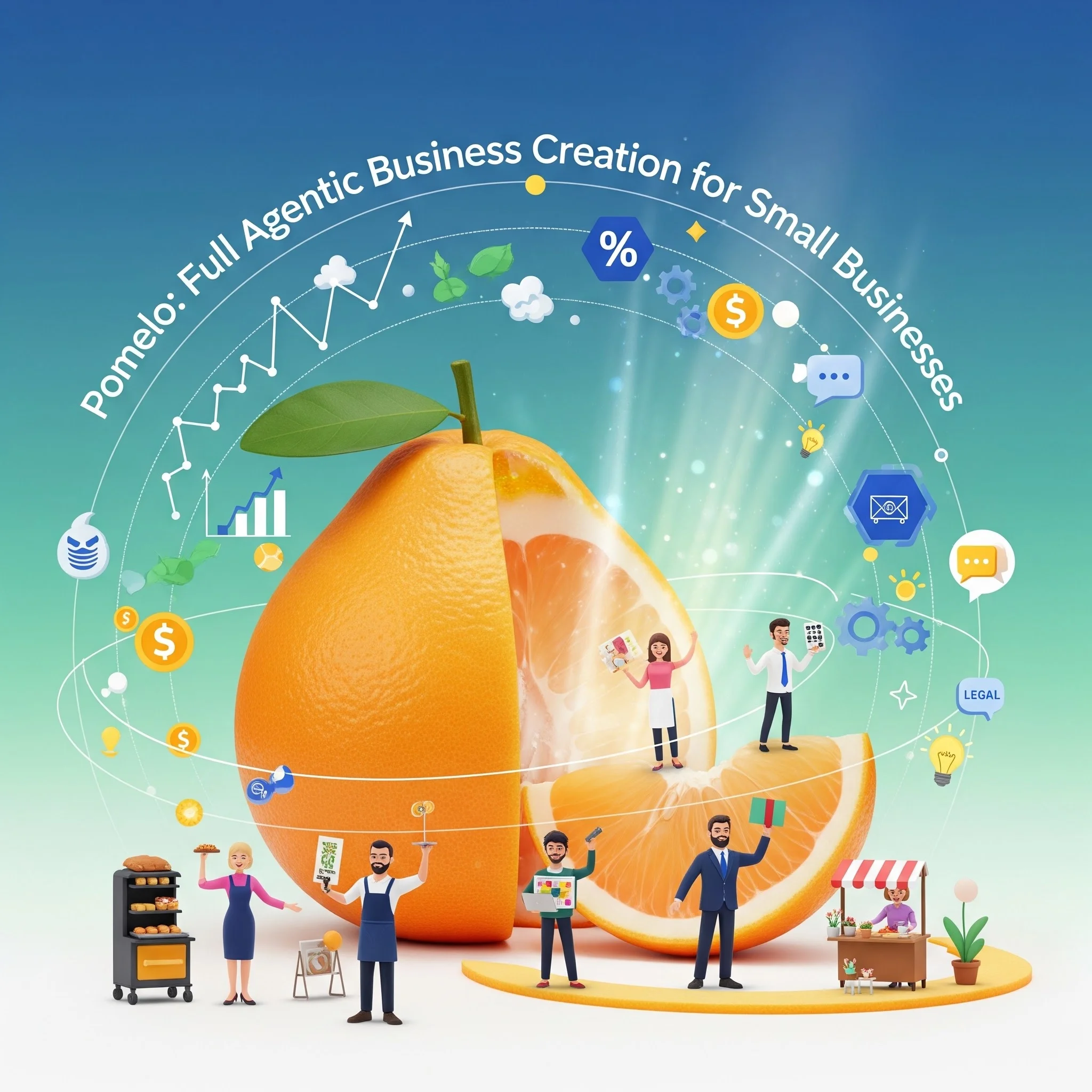
Pomelo, Google’s AI platform for small and medium businesses, received a major upgrade to full agentic capabilities. The new Pomelo agent starts by building what Google calls your Business DNA — your brand identity — either by analyzing product documents and photos you upload, or by conversationally building it from scratch.
What Pomelo Can Now Do
- Generate a complete brand book: custom images, fonts, and colors
- Design and deploy a fully working website in a few clicks
- Handle what previously required multiple tools, subscriptions, and vendors — all in one workflow
For solopreneurs, consultants, and small business owners, Pomelo represents the convergence of branding, design, and web development into a single AI-managed process.
What Google I/O 2026 Really Means: The Platform Shift Is Here
Step back and look at all of these announcements together, and a single pattern emerges with unmistakable clarity: Google is not adding AI features to its products. Google is rebuilding every single one of its products with AI as the foundation.
Search, Workspace, Android, hardware, Chrome, YouTube, Cloud, DeepMind research — every surface Google owns is being restructured around AI-native architecture. And Google is backing this with $190 billion in capital expenditures this year alone.
This is not a feature release cycle. This is a platform shift — the kind that happens once or twice per decade and fundamentally restructures which tools people use, which skills are valuable, and which businesses survive.
What This Means for You
- If you’re a creator: You now have access to professional-grade video, audio, and design tools that previously required a full production team.
- If you’re a developer: The barrier to software development has collapsed. Describing what you want is increasingly sufficient to produce working code.
- If you’re a researcher: Databases that took hours to analyze now take minutes.
- If you’re a business owner: Branding, web development, and administrative operations can now be automated at a fraction of the previous cost.
- If you’re a consumer: Search, YouTube, and your smartphone are becoming fundamentally more useful — and most of these updates are free.
The question is no longer whether AI will change your industry. It’s whether you’ll be ready when it does.
Google I/O 2026 Quick Reference Summary
| Announcement | Category | Available Now? |
|---|---|---|
| Gemini 3.5 Flash | AI Model | Yes |
| Gemini Omni Flash | Video Generation | Yes |
| New Google Search | Search | Yes (simulations: summer) |
| Gemini Spark | AI Agent | Rolling out |
| Daily Brief | Productivity | Yes |
| Anti-Gravity 2.0 | Developer Tools | Yes |
| Google Flow + Music | Creative Tools | Yes |
| Stitch (5 upgrades) | UI Design | Yes |
| Google Picks | Image Editing | Yes |
| Project Genie | Virtual Worlds | Preview |
| Ask YouTube | Video Search | Rolling out |
| Android XR Glasses | Hardware | Announced |
| Gemini for Science | Research Tools | GitHub now |
| SynthID Expansion | AI Safety | Yes |
| Pomelo Agent | Business Tools | Yes |
Final Thoughts: The Age of AI Infrastructure Is Here
Google I/O 2026 wasn’t a product launch event. It was a declaration of intent. Google is signaling, with $190 billion in annual CapEx and 20-plus simultaneous AI releases, that it intends to make AI infrastructure as universal and invisible as electricity — something that powers everything without being the thing itself.
The tools released at this event are not experimental. They are production-ready, available today, and designed for mass adoption. From the free global rollout of Search simulations to the open-source availability of Science Skills on GitHub, Google is actively reducing the friction between AI capability and everyday use.
For a critical perspective on whether the AI industry’s infrastructure can keep pace with these ambitions, see our analysis: Is the AI Bubble About to Pop?.
For more context on the AI landscape, explore our AI news coverage, best AI tools for 2026, and AI comparisons.
Frequently Asked Questions
What was the biggest announcement at Google I/O 2026?
The biggest announcement was likely the Google Search redesign — the first major change in 25 years — featuring generative results, AI agents inside the search bar, and interactive simulations. However, Gemini 3.5 Flash (4x faster, 50% cheaper) is arguably the most impactful for developers.
When is Gemini 3.5 Flash available?
Gemini 3.5 Flash is available now. The larger Gemini 3.5 Pro model launches next month.
What is Gemini Spark?
Gemini Spark is a 24/7 autonomous AI agent integrated with Google Workspace that works while you sleep. It monitors Gmail, Calendar, and other services to complete tasks automatically.
How does the new Google Search work?
The new Search accepts images, files, and videos as input, generates custom UIs for specific queries, embeds AI agents in the search bar, and can create interactive simulations within results.
What is Anti-Gravity 2.0?
Anti-Gravity 2.0 is Google’s multi-agent developer platform rebuilt as a chat interface. You describe what you want to build in plain English and it writes, debugs, and deploys the software autonomously.
Is SynthID available to the public?
Yes. SynthID has watermarked over 100 billion images and videos. The detector is accessible within the Gemini app, and new partners include OpenAI and Eleven Labs.
Sources
- Google I/O 2026 Keynote
- Gemini 3.5 Flash Technical Report
- Google Search AI Updates
- SynthID Watermarking
- Android XR Platform
- Reuters: Google I/O 2026 Coverage
Written by Simple AI Guide Team
We are a team of AI enthusiasts and engineers dedicated to simplifying artificial intelligence for everyone. Our goal is to help you leverage AI tools to boost productivity and creativity.
Personally Tested by Our Team
This article and all recommended tools were reviewed with real prompts, hands-on checks, and editorial QA before publishing.
Testing Methodology
We test each AI tool using standardized prompts across 5 categories: accuracy, speed, ease of use, value, and unique features.
Content Last Updated
Last reviewed and updated on May 21, 2026. We'll update again when new versions are released.
Discussion
Comments powered by Supabase
Continue Reading
Related Articles
Google I/O 2026: The Day AI Transitioned from Predicting Text to Simulating Reality
Complete breakdown of Google I/O 2026: Gemini Omni Flash video generation, Antigravity 2.0 agentic framework, Gemini Spark 24/7 autonomous agents, Search reimagined with generative UI, Stitch/Flow creative tools, smart eyewear, and more.
Read moreThe Google I/O 2026 Megadrop: Autonomous Agents, Multimodal World Models, and the Changing Fabric of the Web
Complete deep dive analysis of Google I/O 2026 — Gemini 3.5 Flash vs Claude Opus 4.7, Gemini Omni multimodal world model, Gemini Spark & Antigravity 2.0 autonomous agents, Universal Cart, AI-driven Search overhaul, AR glasses with SynthID, and the broader AI industry shakeup.
Read moreThe Day Code Editors Vanished: Inside Google's Forced Pivot to Antigravity 2.0
Google phased out traditional editors in favor of Antigravity 2.0 — an AI-native development ecosystem powered by Gemini 3.5 Flash and managed agents. Complete analysis of the pivot, backlash, and what it means for developers.
Read more