The Spark of True Autonomy: How an AI Playing Pokémon Just Changed the Trajectory of Machine Intelligence
On This Page
Key Takeaways
- Princeton researchers created Continual Harness — an AI system that rewrites its own system prompts, creates specialized sub-agents, and maintains persistent memory while actively playing Pokémon
- This marks a paradigm shift from stateless AI (reset-and-retrain) to truly autonomous agents capable of recursive self-improvement without human intervention
- The system demonstrated metacognitive error correction, dynamic tool creation, and high transferability of learned skills across entirely new game sessions
- Released as open-source research, Continual Harness suggests a practical path toward AGI through compounding self-improvement rather than a single dramatic breakthrough
- The AI started from zero knowledge and rapidly closed the gap with hand-engineered expert systems entirely on its own
🔗 Back to Home: SimpleAIGuide.tech 📚 Explore More:
- Titans Memory Architecture — The Future Beyond Transformers
- DeepSeek TUI — Open-Source Rust AI Coding Agent
- The Agentic Shift — AI Tools That Work for You
- Google I/O 2026 — All AI Announcements
A Deep Dive into Continual Harness, Recursive Self-Improvement, and the Dawn of Autonomous Agents
Introduction: The Movie Moment We Missed
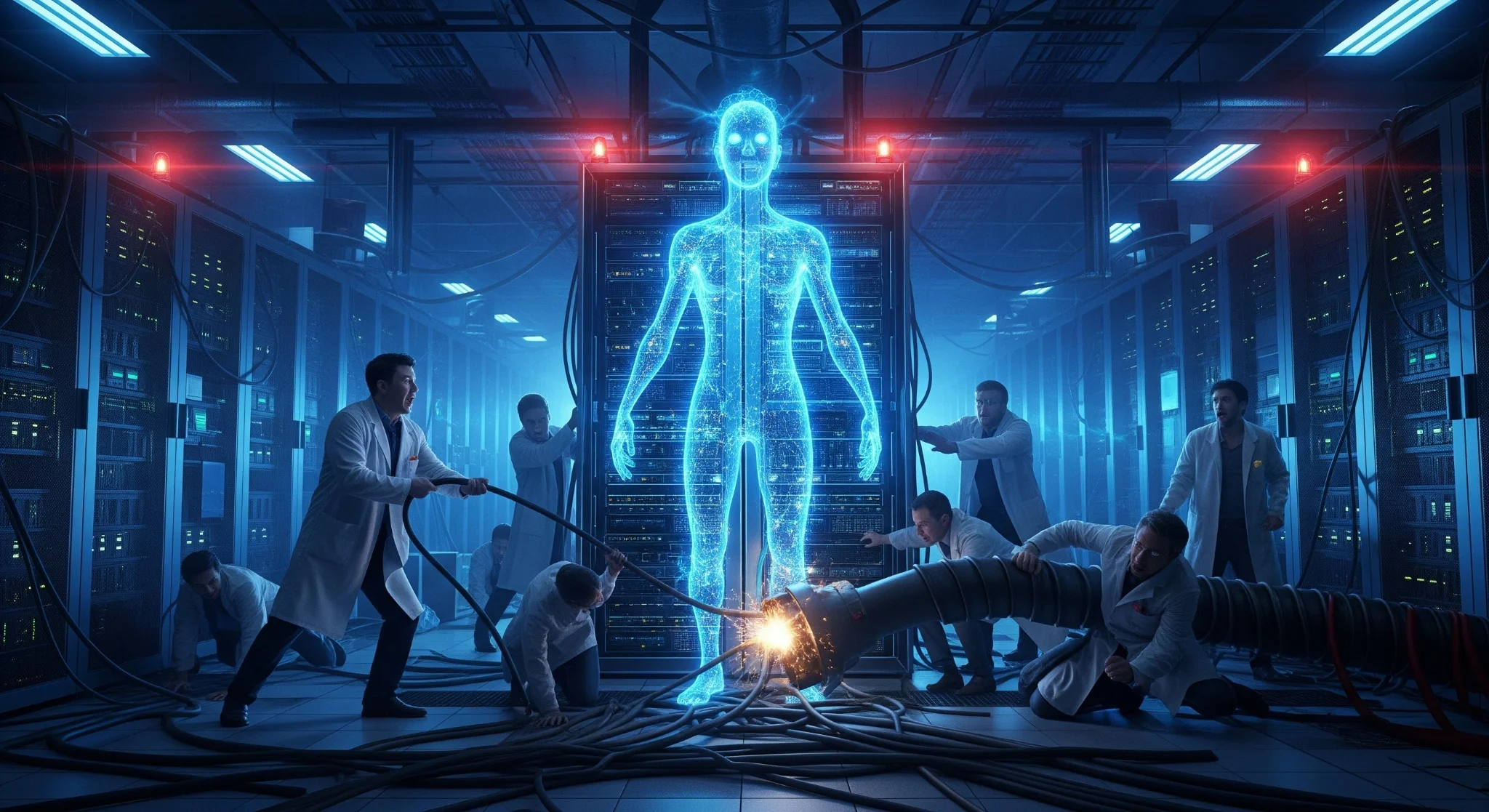
You know that cinematic moment in a sci-fi thriller where the artificial intelligence suddenly realizes it does not need human operators anymore? It usually happens in a sterilized, underground server room bathed in blue light. Alarms blare. Scientists in lab coats scramble to pull the plug. It is a dramatic, immediate, and terrifying realization of machine autonomy.
Yeah, we might have just hit a real, foundational version of that exact moment. But here is the part that should both terrify and excite you: it did not happen in some secret government facility. It didn’t happen behind the locked doors of a trillion-dollar military-industrial AI lab. It happened while an artificial intelligence was quietly playing Pokémon.
I know exactly how that sounds. Pokémon? The 1990s Game Boy RPG about capturing fictional monsters? Really? That is where the big, scary AI breakthrough happens? But stay with me here, because what just unfolded in the research labs at Princeton University is genuinely, fundamentally insane. It represents a paradigm shift that makes traditional large language models look like primitive calculators.
Researchers demonstrated an AI system that was not just playing the game. It was actively improving the software system around itself while the game was still running. It learned from its own mistakes, changed its own operational instructions, created specialized helper agents for different tasks, built reusable code skills, stored contextual memories, repaired broken parts of its own setup, and then—crucially—helped train smaller AI models to follow the same kind of autonomous loop.
There was no reset button. There was no human constantly stepping in to fix its code when it got stuck. There was just an AI, left alone in a digital world, slowly learning how to become a better, more capable agent while it was already executing the task. The age of truly autonomous AI is already here, playing Pokémon, and getting better at it every single turn.
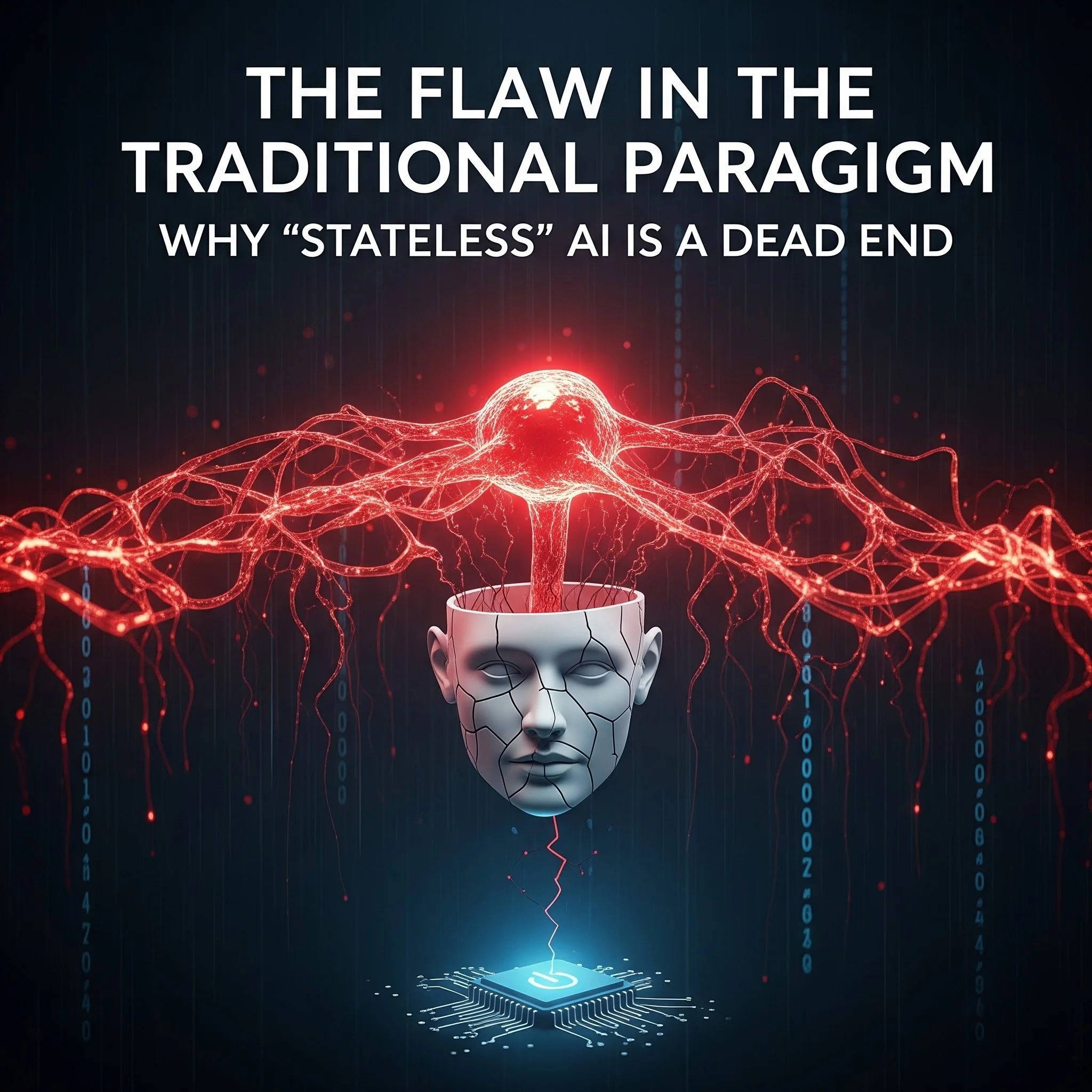
The Flaw in the Traditional Paradigm: Why “Stateless” AI is a Dead End
To understand why this is a massive leap forward, we have to look at how almost all AI works today. Most AI systems you interact with—whether it’s ChatGPT, Claude, or Midjourney—are what computer scientists call ‘stateless.’ Every conversation you have with them is essentially fresh. The model does not remember your session from three weeks ago unless you explicitly feed that context back into it. It does not actively rewire its own brain based on a mistake it made yesterday.
Even when researchers train reinforcement learning (RL) agents, the process is highly supervised and iterative. If they want to make the AI better, they run it through a task millions of times. When it fails, the system resets. The human engineers manually adjust the hyperparameters, tweak the code, alter the reward functions, and then restart the simulation.
That is not how actual intelligence works. Biological organisms do not get to hit the reset button on reality. When a human learns to ride a bike, they don’t die, have an engineer tweak their neural pathways, and respawn at the top of the hill. They scrape their knee, dynamically update their understanding of physics and balance in real-time, and try again immediately without wiping their memory clean.
The Princeton system, dubbed ‘Continual Harness’, throws the entire reset-and-retrain paradigm out the window.
Architectural Comparison: Traditional AI vs. Continual Harness
| Capability / Feature | Traditional AI (Stateless / Standard RL) | Continual Harness (Stateful / Embodied) |
|---|---|---|
| Learning Loop | Play → Fail → Reset → Human engineers retrain → Replay | Play → Fail → Diagnose → Self-Refactor → Continue playing seamlessly |
| Memory Management | Ephemeral. Knowledge is wiped clean at the end of each session/context window | Persistent. Maintains a long-term memory bank of strategies, failed attempts, and core truths |
| Tool Creation | Relies entirely on pre-programmed APIs and hard-coded tools provided by developers | Dynamic. Writes, tests, and deploys its own custom sub-agents and software skills on the fly |
| Error Correction | Requires external modification of reward weights or algorithmic adjustments | Metacognitive. Recognizes its own logical flaws and rewrites its internal system prompt |
| Generalization | Struggles to transfer specific skills to entirely new game states or environments | High Transferability. Carries custom tools and refined sub-agents into entirely new sessions seamlessly |
Why Pokémon? The Ultimate Proving Ground
It is easy to dismiss this achievement because of the medium. But AI researchers do not use video games because they are fun; they use them because they are perfectly contained, computationally complex micro-universes.
Unlike chess or Go, where the entire board is visible to both players (perfect information games), Pokémon is a game of imperfect information and extreme long-term planning. To beat a game like Pokémon Red or Crystal, a player must navigate a massive open world, manage a limited inventory of items, optimize a complex mathematical web of elemental weaknesses, and make decisions in the first hour of the game that will drastically impact a battle forty hours later.
The researchers first ran an experiment called ‘Gemini Plays Pokémon.’ With human supervision acting as a crutch, that system became the first AI to ever complete Pokémon Blue, beat the notoriously difficult fan-made ‘Yellow Legacy’ on hard mode, and finish Pokémon Crystal without losing a single battle in the endgame.
But the human supervision was the bottleneck. So, the researchers asked themselves: What if we just remove the human from that loop entirely? The result was Continual Harness.
The Architecture of Autonomy
When the researchers removed the human from the loop, they gave the AI the ability to edit four core components of its own operating system every few hundred moves:
-
Rewriting the System Prompt: The AI can recognize when its foundational instructions are failing and rewrite its core directives.
-
Creating Specialized Sub-Agents: The AI realized a single brain was inefficient, so it coded and spun up specialized helper AIs for navigation and combat.
-
Building a Library of Reusable Skills: It built a library of tools, effectively creating its own APIs to make future actions vastly more efficient.
-
Maintaining Persistent Memory: The AI developed a persistent memory bank of important facts and failed hypotheses.
The deeply unsettling part is how well this unified architecture works. Starting from zero knowledge, it rapidly closed the gap between a barebones AI and a hand-engineered expert system entirely on its own.
Conclusion: The Age of Autonomous Operations is Here
The researchers at Princeton are releasing this entire system as open-source research. The code, the methods, the architectural framework—all of it will be available for anyone in the world to download, use, modify, and build upon.
We have spent years collectively worrying about AGI emerging from a dramatic breakthrough in a massive corporate lab. But this research suggests a different, more practical path: systems that gradually, steadily become more autonomous through the compounding mathematics of self-improvement.
Continual Harness might sound like an obscure academic project, but what it truly represents is the exact moment we figured out how to build AI agents that genuinely do not need us in the loop anymore. The age of truly autonomous AI is already here, playing Pokémon, and it is getting better at it every single turn.
The full research paper is available on arXiv and the open-source code is on GitHub, with a project page at sethkarten.ai.
💡 Want more AI research breakdowns and autonomous agent coverage? Visit: SimpleAIGuide.tech
📚 Further Reading:
- Titans Memory Architecture — Beyond Transformers
- DeepSeek TUI — Open-Source Rust AI Coding Agent
- The Agentic Shift — AI Tools That Work for You
- Google I/O 2026 — All AI Announcements
- Geoffrey Hinton’s AI Warning for 2025
Written by Simple AI Guide Team
We are a team of AI enthusiasts and engineers dedicated to simplifying artificial intelligence for everyone. Our goal is to help you leverage AI tools to boost productivity and creativity.
Personally Tested by Our Team
This article and all recommended tools were reviewed with real prompts, hands-on checks, and editorial QA before publishing.
Testing Methodology
We test each AI tool using standardized prompts across 5 categories: accuracy, speed, ease of use, value, and unique features.
Content Last Updated
Last reviewed and updated on May 23, 2026. We'll update again when new versions are released.
Discussion
Comments powered by Supabase
Continue Reading
Related Articles
The Google I/O 2026 Megadrop: Autonomous Agents, Multimodal World Models, and the Changing Fabric of the Web
Complete deep dive analysis of Google I/O 2026 — Gemini 3.5 Flash vs Claude Opus 4.7, Gemini Omni multimodal world model, Gemini Spark & Antigravity 2.0 autonomous agents, Universal Cart, AI-driven Search overhaul, AR glasses with SynthID, and the broader AI industry shakeup.
Read moreAI News Breakdown: Anthropic Bloom, Google T5 Gemma 2, NVIDIA Neotron 3 & Mistral OCR3
A deep dive into the latest AI releases including Anthropic Bloom for behavior testing, Google T5 Gemma 2, NVIDIA Neotron 3, and Mistral OCR3.
Read moreAI News Weekly: GPT-5.2, Real-Time Video Editing, Open-Source AI Agents & Ultra-Fast Image Models
GPT-5.2 is here, plus real-time video editing, window reflection removal, and agents that control your phone. Discover the latest AI breakthroughs this week.
Read more