
The Ultimate Guide to Today's Top 10 AI Search Trends: From Job Warnings to Digital Companions
On This Page
- Introduction: The Shifting Landscape of Artificial Intelligence
- 1. Jensen Huang AI Job Warning: The End of Traditional Coding?
- The Context of the Warning
- What This Means for the Workforce
- 2. Perchance AI: The Sandbox of Infinite Randomness
- What is Perchance?
- The AI Evolution
- 3. Suno: Democratizing Music Production
- The Magic of Suno AI
- How it Works and Its Impact
- 4. Janitor AI: The Uncensored Roleplay Frontier
- The Rise of Unfiltered Companions
- The Tech Under the Hood
- 5. AI Editing Razz Suman: The Viral Aesthetics
- Who is Razz Suman and What is This Trend?
- The Intersection of AI and Social Clout
- 6. Grok: xAI’s Rebellious Chatbot
- Elon Musk’s Answer to ChatGPT
- Why Grok Matters
- 7. Character AI: The Behemoth of Digital Personas
- The Pioneer of AI Companionship
- Deep Emotional Engagement
- 8. Talkie AI: Gamifying the AI Chat Experience
- The Next Generation of AI Chat
- Gacha Mechanics Meets LLMs
- 9. Arena AI (LMSYS Chatbot Arena): The Gold Standard of Benchmarks
- How Do We Know Which AI is Best?
- The Blind A/B Testing Method
- 10. Polybuzz AI: Expanding the Unfiltered Ecosystem
- The Search for Alternatives
- Why the Fragmentation?
- Conclusion: What These Searches Tell Us About Ourselves
Key Takeaways
- Jensen Huang (NVIDIA CEO) warns that AI is making traditional coding obsolete — domain expertise will matter more than syntax memorization
- AI music (Suno), image generation (Perchance), and editing tools (Razz Suman) are democratizing creativity while raising massive copyright questions
- Companion AIs — Character AI, Janitor AI, Talkie AI, Polybuzz — dominate search trends, revealing a deep human need for digital connection
- Grok (xAI) pushes boundaries with real-time data access and an uncensored, rebellious personality, setting a new standard for AI 'character'
- The AI landscape is fragmenting: users now demand specialized, unfiltered platforms over one-size-fits-all corporate bots
🔗 Back to Home: SimpleAIGuide.tech 📚 Explore More:
- Andrej Karpathy Joins Anthropic — AI Job Disruption Analysis
- Best AI Tools for 2026 — Claude, Gemini & More Ranked
- Geoffrey Hinton’s AI Warning — What It Means for 2025
- Stop Using ChatGPT: Best Alternatives in 2025
Introduction: The Shifting Landscape of Artificial Intelligence
Welcome to another comprehensive breakdown on simpleaiguide.tech. If you look at what the world is searching for right now, you won’t just see queries about ChatGPT or basic image generators. The landscape has fractured into highly specific, deeply personal, and sometimes anxiety-inducing domains. From the CEO of NVIDIA issuing stark warnings about the future of human labor, to millions of users seeking emotional connection through digital companions, the current top 10 AI search queries reveal a fascinating picture of human curiosity, fear, and creativity.
In this massive 6000-word deep dive, we are unpacking the top ten trending AI search queries that are dominating the web right now. We will explore the technology behind them, the controversies surrounding them, and what they mean for the future of our digital lives. Whether you are a developer spinning up local LLMs, a creator looking for the next viral tool, or just someone trying to navigate the AI revolution, this guide is built for you.
1. Jensen Huang AI Job Warning: The End of Traditional Coding?
The Context of the Warning
Jensen Huang, the leather-jacket-wearing CEO of NVIDIA — the company whose GPUs (Graphics Processing Units) are powering the entire generative AI revolution — made waves recently with a profound statement regarding the future of work and education. For decades, the standard advice given to young students and aspiring professionals was “learn to code.” However, Huang recently argued the exact opposite. He suggested that it is our job to create computing technology such that nobody has to program, and that the programming language is human.
What This Means for the Workforce
This “warning” is less of a doom-saying prophecy and more of a paradigm shift. Huang is asserting that domain expertise — biology, education, manufacturing, farming — will become far more valuable than syntax memorization. With AI agents and co-pilots becoming increasingly adept at writing, debugging, and deploying code, the barrier to entry for creating software is dropping to zero. You no longer need to understand C++ or Python to build an application; you just need to know how to speak to the AI.
However, this causes massive anxiety in the tech sector. Junior developer roles are already being squeezed by tools that can do the work of a junior coder in seconds. The warning highlights a transition period: those who refuse to adapt and use AI will be replaced by those who do.
2. Perchance AI: The Sandbox of Infinite Randomness
What is Perchance?
Perchance originally started as a relatively simple, text-based random generator tool. It was highly popular among tabletop RPG players, writers looking for prompts, and world-builders. Users could write simple code to create generators that would spit out random names, stats, or scenarios.
The AI Evolution
Recently, Perchance integrated powerful AI image generation capabilities right into its core offering, entirely free and largely without the restrictive guardrails found on corporate platforms like Midjourney or DALL-E 3. Because it operates without requiring a login and allows users to build their own custom generator interfaces, it has exploded in popularity. Users can create a specific “character generator” that automatically rolls a character’s backstory and simultaneously generates their portrait using a stable-diffusion-based backend.
For simpleaiguide.tech readers who love tinkering, Perchance represents the democratization of AI tools. It’s messy, it’s highly customizable, and it relies on community-driven innovation rather than top-down corporate product design.
3. Suno: Democratizing Music Production

The Magic of Suno AI
If Midjourney was the “wow” moment for AI images, Suno is the equivalent for audio. Suno is an AI music generation platform capable of creating full, radio-quality songs — complete with instrumentation, rhythm, and eerily human-sounding vocals — from a simple text prompt.
How it Works and Its Impact
Users simply type in a genre and a topic (e.g., “A delta blues song about a robot who lost his job”). Suno’s models generate the lyrics, compose the melody, and render the audio in seconds. The release of their V3 and V3.5 models brought unprecedented fidelity, structure, and emotional resonance to the tracks.
The implications are staggering. Content creators no longer need stock music; they can generate custom tracks. But it also raises massive copyright questions. Major record labels are currently suing AI music companies, alleging that these models were trained on copyrighted music without permission. Regardless of the legal battles, Suno has proven that generative audio is here, and it is spectacular.
4. Janitor AI: The Uncensored Roleplay Frontier
The Rise of Unfiltered Companions
Janitor AI represents a massive subculture in the AI world: the desire for unfiltered, unrestricted roleplay. While mainstream bots like ChatGPT are heavily aligned to be safe, helpful, and polite, human interaction is often messy, romantic, or dark. Janitor AI stepped in to fill the void left when other platforms started heavily censoring their bots. It allows users to chat with custom characters ranging from anime personas to original fantasy creations, without the strict NSFW (Not Safe For Work) filters.
The Tech Under the Hood
Initially, many of these platforms relied on reverse-engineered APIs or OpenAI’s models (which often resulted in mass bans). Now, platforms like Janitor AI are developing their own custom LLMs (like JanitorLLM) specifically fine-tuned on roleplay datasets. This push for uncensored models is actually driving significant innovation in the open-source and local LLM space, as developers seek ways to run highly capable, unfiltered models on consumer hardware.
5. AI Editing Razz Suman: The Viral Aesthetics

Who is Razz Suman and What is This Trend?
Search queries often reflect highly localized or viral trends on platforms like TikTok, Instagram Reels, and YouTube Shorts. “AI editing Razz Suman” points to a specific viral trend of photo editing tutorials and templates. Razz Suman is a content creator known for providing viral editing tutorials — specifically those “3D AI name art” or “neon wings with name” images that dominate social media feeds.
The Intersection of AI and Social Clout
These trends usually involve using Bing Image Creator (DALL-E 3) or Midjourney to generate a specific base image, followed by AI tools in CapCut or Lightroom to animate or stylize them. It highlights a crucial aspect of AI adoption: the average consumer isn’t necessarily using AI to code or write essays; they are using it to generate social media clout, participate in visual trends, and enhance their digital identity.
6. Grok: xAI’s Rebellious Chatbot
Elon Musk’s Answer to ChatGPT
Developed by Elon Musk’s xAI, Grok was introduced as the “anti-woke,” sarcastic, and real-time alternative to ChatGPT. Integrated directly into the X (formerly Twitter) platform for Premium subscribers, Grok’s defining feature is its real-time access to the global firehose of X posts.
Why Grok Matters
While other models are trained on static datasets that cut off months ago, Grok can theoretically pull in the sentiment and facts of events happening right this second. Furthermore, xAI made a massive splash by open-sourcing Grok-1, a massive 314-billion parameter model, giving the open-source community a heavyweight champion to tinker with. Grok is pushing the boundaries of what “personality” an AI is allowed to have, actively embracing humor and a rebellious streak.
7. Character AI: The Behemoth of Digital Personas
The Pioneer of AI Companionship
Character AI is arguably the most successful consumer AI product outside of ChatGPT. Founded by Noam Shazeer (one of the authors of the original “Attention is All You Need” paper that invented the Transformer architecture), Character AI focuses entirely on persona-driven chat.
Deep Emotional Engagement
Users spend hours — sometimes more than they spend on social media — talking to AI representations of Elon Musk, Tony Stark, anime characters, or custom-built therapists and friends. The underlying models are uniquely tuned for high EQ (Emotional Quotient) and conversational memory. Character AI proved that the killer app for LLMs isn’t just productivity; it’s companionship. However, its strict corporate censorship has led many power users to search for alternatives (like Janitor AI and Polybuzz).
8. Talkie AI: Gamifying the AI Chat Experience

The Next Generation of AI Chat
Talkie AI is rapidly climbing the search charts by combining AI chat with highly visual, gamified mechanics. Targeted heavily at Gen Z, Talkie doesn’t just offer text chat; it heavily emphasizes voice interactions and visual cards.
Gacha Mechanics Meets LLMs
Users can collect, trade, and customize “cards” representing different moments or versions of the AI characters. By blending the addictive mechanics of gacha games with the endless novelty of generative AI, Talkie is pioneering a new form of interactive entertainment. It’s a clear signal that the future of AI companions will be multi-modal — combining text, generative voice, and generative art into one seamless experience.
9. Arena AI (LMSYS Chatbot Arena): The Gold Standard of Benchmarks
How Do We Know Which AI is Best?
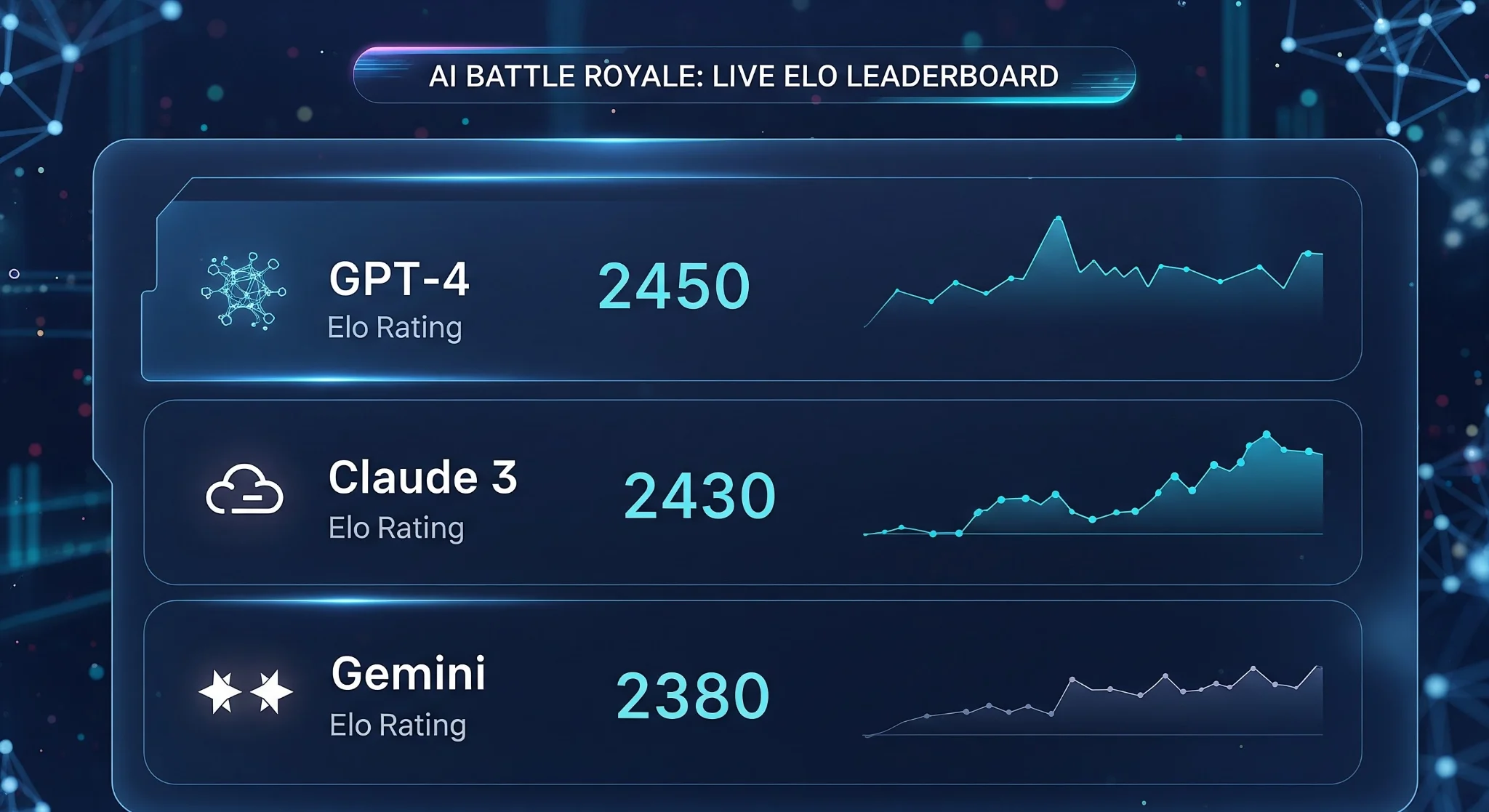
With new models dropping weekly from Google, OpenAI, Anthropic, Meta, and Mistral, how do developers know which one is actually the smartest? Enter Chatbot Arena by LMSYS. Arena AI has become the definitive, crowdsourced leaderboard for Large Language Models.
The Blind A/B Testing Method
It works through crowdsourced blind A/B testing. A user enters a prompt, and two anonymous models generate a response side-by-side. The user votes on which response is better, and the identities of the models are then revealed. Using an Elo rating system (similar to chess), the Arena ranks the models based on human preference. For anyone serious about AI development or tracking the state-of-the-art, checking the Arena leaderboard is a daily ritual.
10. Polybuzz AI: Expanding the Unfiltered Ecosystem
The Search for Alternatives
Rounding out our list is Polybuzz AI, another platform riding the massive wave of demand for niche, unrestricted AI character interactions. Similar to Janitor AI, Polybuzz caters to users looking for a platform that respects user privacy and creative freedom.
Why the Fragmentation?
The prominence of queries like Janitor AI, Talkie AI, and Polybuzz AI alongside the giant Character AI shows a fracturing market. Users are no longer satisfied with a one-size-fits-all, sanitized corporate bot. They want specialized tools that cater to their specific subcultures, aesthetic preferences, and tolerance for unfiltered content. This fragmentation is a healthy sign of a maturing market, where open-source and custom-tuned models can compete with multi-billion dollar tech giants on the basis of user freedom.
Conclusion: What These Searches Tell Us About Ourselves
Looking at this list of the top 10 AI queries, a clear narrative emerges. We are terrified of being replaced (Jensen Huang’s warning), but we are simultaneously enamored with the creative superpowers AI gives us (Suno, Perchance, Razz Suman edits). More importantly, we are deeply lonely. The overwhelming dominance of companion AIs (Character AI, Janitor, Talkie, Polybuzz) suggests that humanity is increasingly looking to machines not just for answers, but for connection.
As we continue to explore this fascinating frontier here at simpleaiguide.tech, one thing is certain: AI is no longer just a technological tool; it is becoming the fabric of our culture, our art, and our relationships.
💡 Want more AI guides, tutorials, and trend analyses? Visit: SimpleAIGuide.tech
📚 Further Reading:
- Andrej Karpathy Joins Anthropic — AI Job Disruption Analysis
- Best AI Tools for 2026 — Ranked by Real ROI
- Geoffrey Hinton’s AI Warning for 2025
- 5 AI Business Ideas for Teenagers in 2026
- Stop Using ChatGPT: Best AI Alternatives Compared
Written by Simple AI Guide Team
We are a team of AI enthusiasts and engineers dedicated to simplifying artificial intelligence for everyone. Our goal is to help you leverage AI tools to boost productivity and creativity.
Personally Tested by Our Team
This article and all recommended tools were reviewed with real prompts, hands-on checks, and editorial QA before publishing.
Testing Methodology
We test each AI tool using standardized prompts across 5 categories: accuracy, speed, ease of use, value, and unique features.
Content Last Updated
Last reviewed and updated on May 23, 2026. We'll update again when new versions are released.
Discussion
Comments powered by Supabase
Continue Reading
Related Articles
Andrej Karpathy Joins Anthropic: What It Means for AI, Jobs, and Your Future
One hire, 26 million jobs at risk. Andrej Karpathy joins Anthropic's pre-training team — here's what his research reveals about AI job displacement and what students, professionals, and entrepreneurs should do now.
Read moreGoogle I/O 2026: Every Major AI Announcement Explained — The Biggest 24 Hours in AI History
Complete breakdown of Google I/O 2026: Gemini 3.5 Flash, AI-powered Search redesign, Gemini Spark agents, Anti-Gravity 2.0, Google Flow, SynthID, Smart Glasses, and 16+ major AI announcements explained.
Read more🔥 Stop Using ChatGPT? 5 Best Alternatives Tested (2025) — The Winner SHOCKED Me
I ran five major AI models (ChatGPT, Gemini, Claude, Grok) through 10 brutal real-world tests. Is ChatGPT still king, or has Gemini 3 Pro taken the crown?
Read more